


Social Resilience Re-imagined
Social resilience is undergoing a conceptual transformation. Once defined narrowly as the ability to “absorb external changes and stresses,” it is now understood as a socially constructed phenomenon shaped by relationships, identities, and power dynamics. Climate‑change research highlights how bonding, bridging, and linking forms of social capital create the structural pathways through which communities mobilize support, interpret risk, and coordinate collective action. At the same time, a psychosocial lens reveals how shared narratives, trust, and reciprocity generate the cognitive resources that allow groups to adapt and reorganize. A rights‑based perspective further expands resilience by exposing inequalities, emphasizing recognition, and demanding transformation toward equitable socio‑political arrangements. When combined with lived experiences, marked by uncertainty, turning points, and shifting environments, social resilience emerges not as a capacity but as an evolving process of meaning‑making, adaptation, and collective possibility and responsibility.
Resilience
Resilience is a dynamic, socially and politically embedded process, nurtured through relationships with institutions, organizations, and civil society, collectively shaping lived experiences and well‑being amid challenges.
Resilience is inherently social, emerging through networks (bonding, bridging, and linking), shared trust and belonging, and equity‑driven participation. We foster resilience by building inclusive, connected, and supportive relationships across diverse social contexts.
Resilience arises from the social, political, economic, and cultural environments shaping our lives. Coping, adaptation, and transformation occur within these contexts, highlighting how interconnected structures and conditions helps to endure challenges, foster change, and sustain well‑being.
Social Resilience: Conceptual Foundations & Contemporary Re‑thinking
Social resilience is presented here as a dynamic, socially constructed process shaped by migrants’ lived experiences, their interactions with political, economic, cultural, and social environments, and the institutional structures that influence everyday life. Together, these two articles show how resilience extends beyond “capacity” or “ability” and instead emerges through status, networks, support, and visibility—the core dimensions that anchor migrants’ experiences of vulnerability, adaptation, and transformation. This section brings these insights together to highlight social resilience as a multifaceted, context‑embedded phenomenon essential for understanding migration, integration, and belonging.

Social Resilience:
A Critical Synopsis of Definitions
Published in: Corvinus Journal of Sociology and Social Policy, 2024

Conceptualizing social resilience in the context of migrants’ lived experiences
Published in: Geoforum, 2023
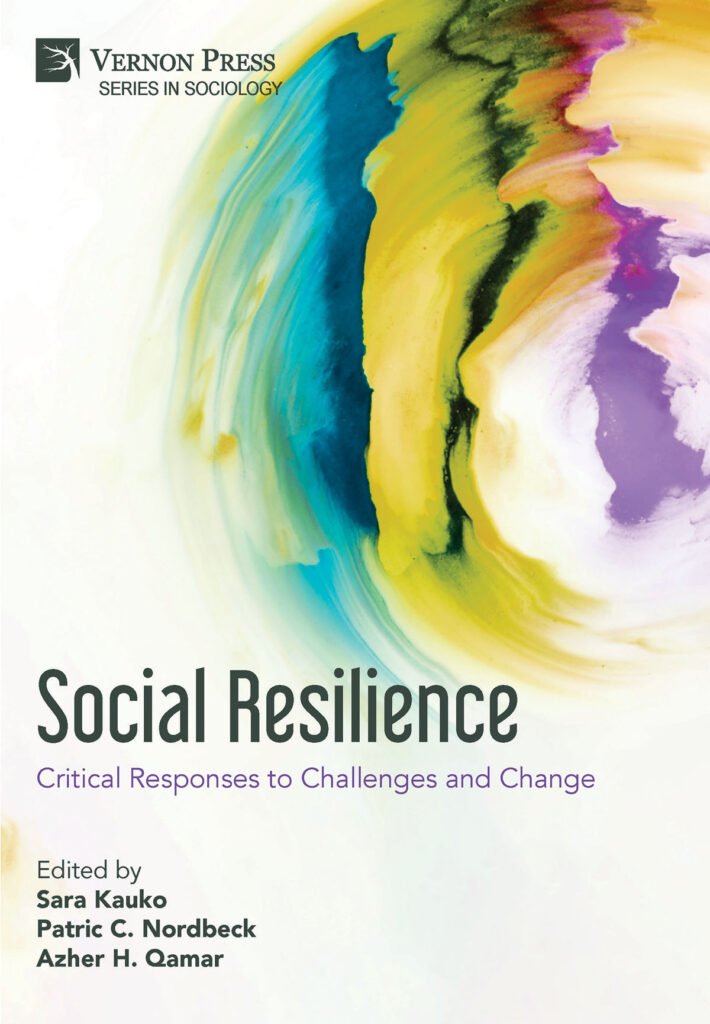
Social Resilience
Critical Responses to Change and Challenges
Social Resilience: Critical Responses to Change and Challenges brings together eight interdisciplinary chapters that rethink resilience as a social, relational, and context‑bound process rather than a fixed capacity to “bounce back.” Drawing on psychology, anthropology, social work, sociology of law, and legal studies, the volume explores how resilience unfolds across migration, LGBTQ+ experiences, environmental and economic crises, and everyday disruptions to normalcy. While some contributions engage classic socio‑ecological notions of adaptive capacity, others challenge the neoliberal framing of resilience as a normative ideal, instead emphasizing how people act, relate, and persist across time and space. Together, the chapters offer a compelling, multi‑voiced critique and invite readers to see resilience as an ongoing social practice rooted in lived experience. Learn More
Social dimensions of resilience and climate change: a rapid review of theoretical approaches.
The review shows that climate‑change research has largely overlooked how social capital shapes the social dimensions of resilience. Across 18 studies, three interconnected approaches emerge: structural social capital (bonding, bridging, linking), cognitive social capital supporting collective psychosocial resilience, and rights‑based perspectives highlighting equity and power. Together, they demonstrate that social resilience depends on social interconnectedness, reciprocal engagement, and inclusive action. The article calls for theoretical triangulation to integrate these dimensions into climate‑change studies.
Voices & Perspectives
Commentary and reflections on how resilience takes shape through lived experience, where people navigate change, uncertainty, and the everyday work of moving forward. Perspectives that reveal how resilience, as a dynamic social process, built through connection, context, and the shared effort of adapting to change.

Social Resilience: Tracing Conceptual Evolutions and Theoretical Pathways
What exactly do we mean when we talk about social resilience? The term has gained traction in recent years, especially in discussions about sustainability, wellbeing, and how communities cope with crises. Yet, definitions of social resilience vary widely, often focusing narrowly on the ability to “withstand” or …Read full text
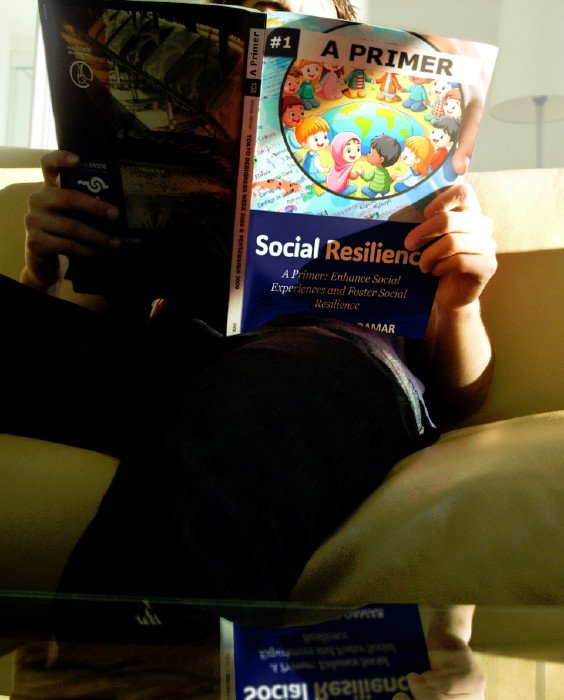
How can people build resilience to withstand life’s adversities?
The term “Social Resilience” is made up of two important ideas. “ Social ” means the way we connect with each other. “ Resilience ” is taking action when things change or become difficult. Social resilience helps people cope, recover, and thrive by creating networks of trust, inclusion, and shared responsibility. …Read full text

Rethinking Climate Adaptation: A Social Lens on Resilience
Rethinking Climate Adaptation: A Social Lens on Resilience Climate change research has paid little attention to the social dimensions of resilience and their link to social capital. The article “Social dimensions of resilience and climate change: a rapid review of theoretical approaches” reviews 27 studies (18 directly relevant) to explore how social capital connects with …… Read full text
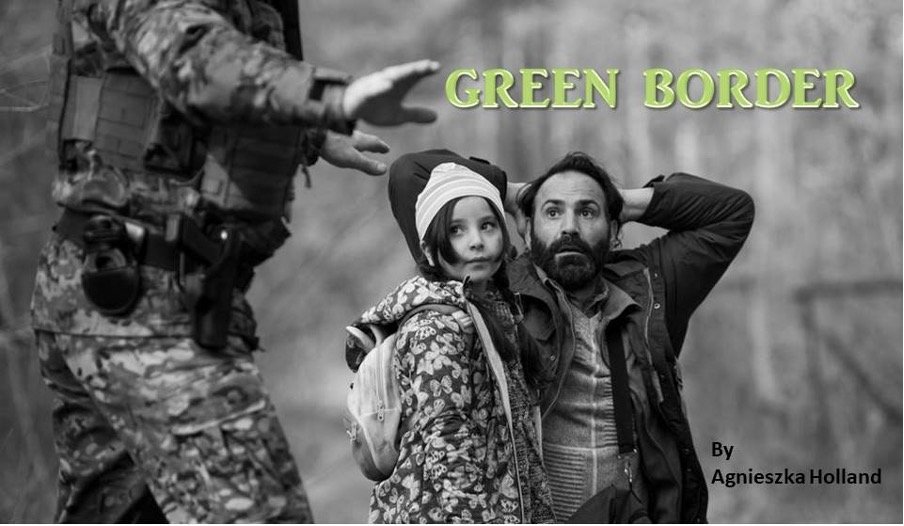
At the Edge of Humanity: Reflections on the Movie Green Border
The movie Green Border engages us deeply with lived realities. It exposes enacted resilience that is a collective course of action to endure and survive while challenging a system marked by inhumanity. In an interview with Swedish Radio, Holland said “It’s a human story, and the most important thing is to give a voice…Read full text
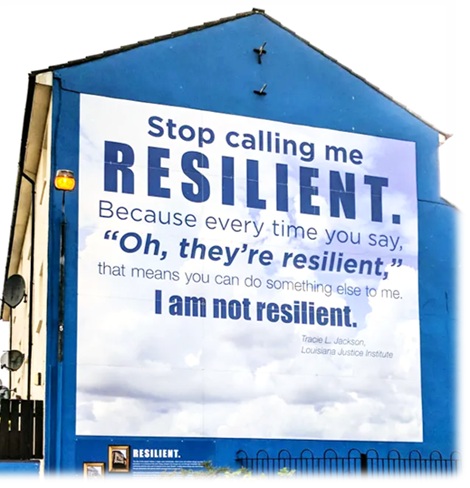
“Stop calling me RESILIENT”
June 17, 2025
“Every Time You Say, ‘Oh, They’re So Resilient,’ That Means You Can Do Something Else to Me.” What does it really mean to call someone “resilient”? And who benefits from it? People often use the word “resilient” as a compliment for those who’ve been through really tough times. It sounds like praise — like saying.…Read full text
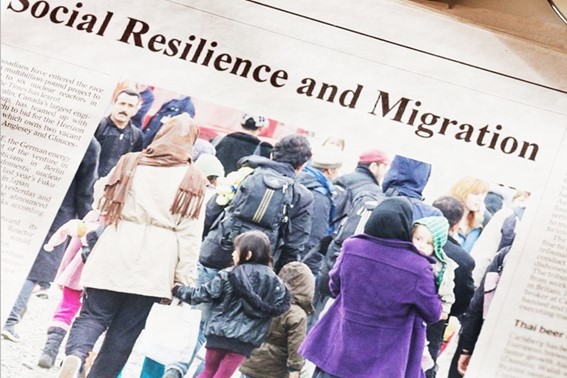
Conceptualizing Social Resilience in Migrants’ Lived Experiences
October 1, 2025
What does it really mean for migrants to be “resilient”? Too often, resilience is described as an individual skill or capacity, overlooking the fact that it is also a deeply social process shaped by relationships, institutions, and lived experiences. Read full text

Oxytocin, Resilience, and the Politics of Human Enhancement
July 20, 2025
In this thought-provoking and interdisciplinary lecture, Professor Julian Reid, a leading scholar in international politics, political theory, and biopolitics, explores a compelling intersection of neuroscience and political science. With clarity and depth, he invites us ….…Read full text