
The Social Insight
Weaving insight from the tangled threads

The Social Insight: Bridging Concepts and Lived Realities
Social realities (from family and local norms to global movements and structural inequalities) are formed and transformed through interactions, power dynamics, and the narratives of lived experiences. Understanding how people live, interact, and navigate the world lies at the heart of The Social Insight. It reveals human lives, social structures, and the invisible threads connecting individuals, communities, and institutions. These connections are (co)constructed through relationships, shaped by histories, and constantly evolve within dynamic contexts.
Ideas
Short, sharp reflections opening new ways of thinking
Research
Concepts, questions, and emerging directions
Perspectives
Voices and viewpoints expanding the horizon
Recent Work & Contributions
🔹 New edited volume 👉 Social Resilience: Critical Responses to Challenges and Change (Vernon Press, 2026).
🔹 Policy Brief: “Beyond Formal Integration: Policy Pathways for Belonging and Inclusive Integration” 👉 Delmi Policy Brief 2026:10.
🔹 “The Church’s Café Serving Migrants in Sweden: Creating a Support Network for Social Resilience” in Social Resilience: Critical Responses to Challenges and Change. 👉 Read in Vernon Press
🔹 Conceptualizing social resilience in the context of migrants’ lived experiences. 👉 Read in Geoforum
🔹 Young adult migrants’ social experiences in Sweden: ‘Melting pot’ and ‘salad bowl’ perspectives on social integration. 👉 Read in Children & Society
Migration and Integration
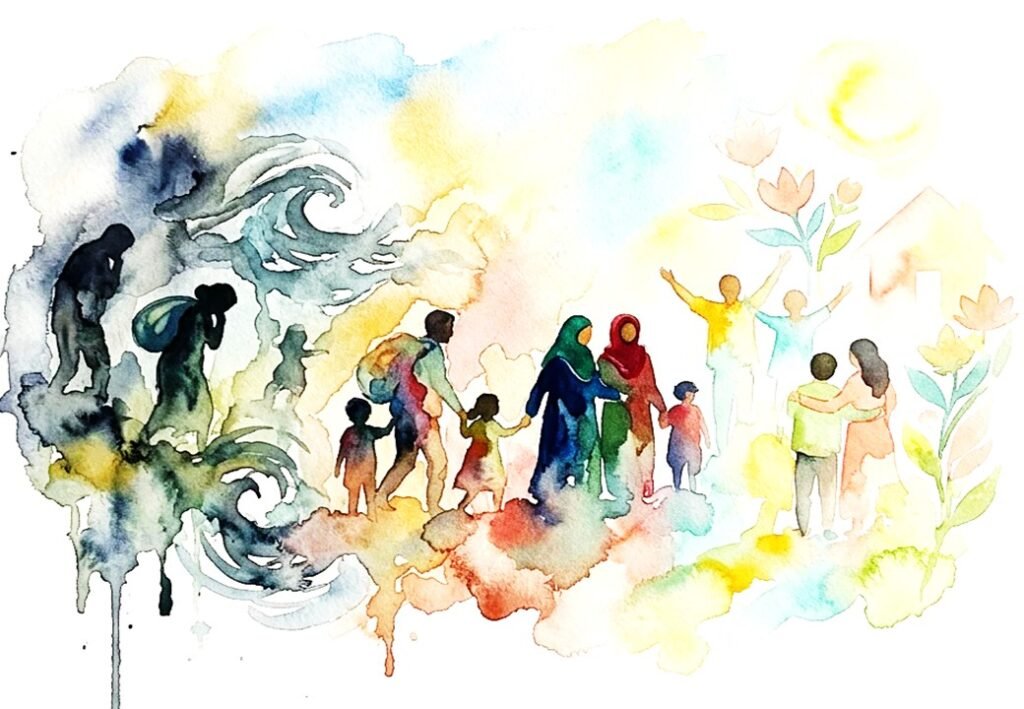
Migration and integration form a dynamic social process shaped by movement, disruption, and the search for belonging. Migration emerges not only as relocation but as a profound transition marked by uncertainty, shifting identities, and encounters with new political, cultural, and social environments. Integration, meanwhile, is revealed as neither a linear pathway nor a uniform expectation or outcome. It oscillates between assimilationist pressures (melting down into dominant norms) and relational, reciprocal models that value diversity, social connection, and shared participation. Social resilience becomes the bridge between these experiences: migrants navigate status, networks, support, and visibility while learning to “bounce ahead” in unfamiliar contexts. Putting together integration is most meaningful when grounded in lived experience, when migrants are recognized as beings rather than becomings, and when host societies cultivate spaces for interaction, reciprocity, and co‑existence. People, places, and practices contribute to give meaning to integration by shaping how individuals and groups understand belonging, participation, and coexistence.
Social Resilience Reimagined
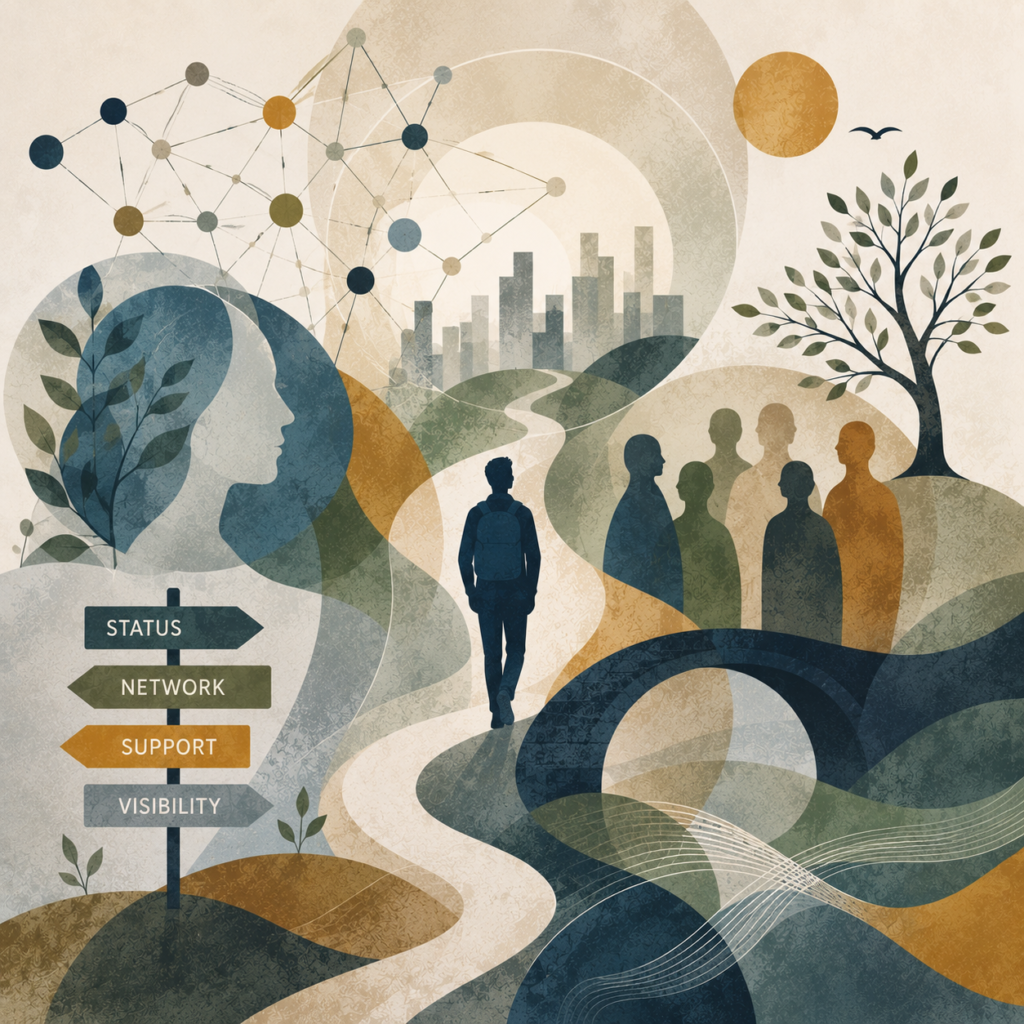
Social resilience is undergoing a conceptual transformation. Once defined narrowly as the ability to “absorb external changes and stresses,” it is now understood as a socially constructed phenomenon shaped by relationships, identities, and power dynamics. Climate‑change research highlights how bonding, bridging, and linking forms of social capital create the structural pathways through which communities mobilize support, interpret risk, and coordinate collective action. At the same time, a psychosocial lens reveals how shared narratives, trust, and reciprocity generate the cognitive resources that allow groups to adapt and reorganize. A rights‑based perspective further expands resilience by exposing inequalities, emphasizing recognition, and demanding transformation toward equitable socio‑political arrangements. When combined with lived experiences, marked by uncertainty, turning points, and shifting environments, social resilience emerges not as a capacity but as an evolving process of meaning‑making, adaptation, and collective possibility and responsibility.
Insights & Conversations
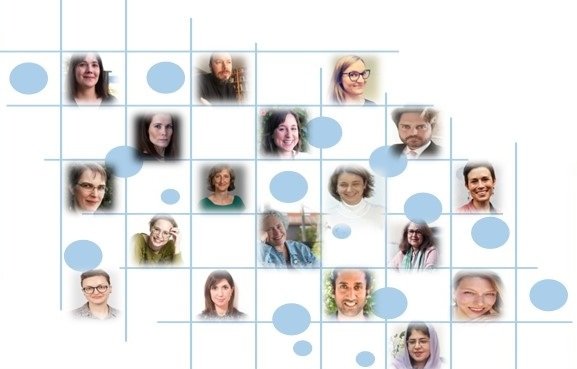
Thought‑provoking conversations with researchers and professionals exploring the ideas and questions shaping society. From migration and belonging to communities, resilience, and everyday social life, this space brings complex research beyond academia—making it accessible, relatable, and connected to the realities people live every day. Through diverse voices and grounded perspectives, we open up conversations that inspire reflection, broaden understanding, and invite readers to engage with the social worlds that shape us.
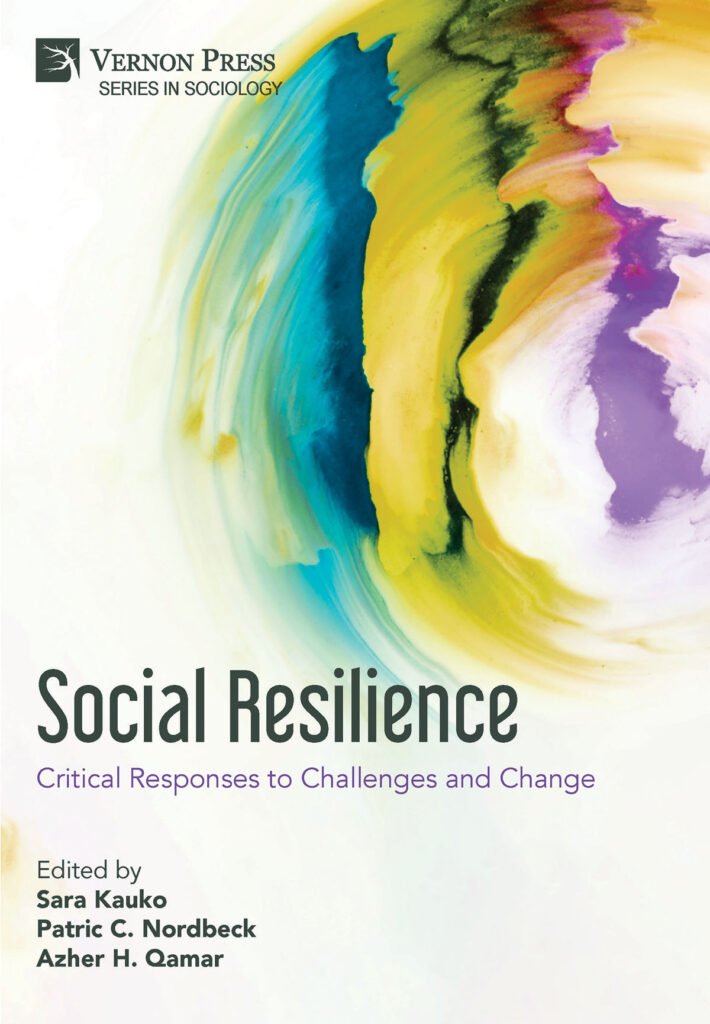
Social Resilience
Critical Responses to Change and Challenges
Social Resilience: Critical Responses to Change and Challenges brings together eight interdisciplinary chapters that rethink resilience as a social, relational, and context‑bound process rather than a fixed capacity to “bounce back.” Drawing on psychology, anthropology, social work, sociology of law, and legal studies, the volume explores how resilience unfolds across migration, LGBTQ+ experiences, environmental and economic crises, and everyday disruptions to normalcy. While some contributions engage classic socio‑ecological notions of adaptive capacity, others challenge the neoliberal framing of resilience as a normative ideal, instead emphasizing how people act, relate, and persist across time and space. Together, the chapters offer a compelling, multi‑voiced critique and invite readers to see resilience as an ongoing social practice rooted in lived experience.

“Rather than simply celebrating resilience as a virtue (in liberal governance), I critiques its instrumentalization. Resilience is now framed not as a collective good but as an individual obligation: the ability to adapt, survive, and thrive amid adversity without demanding structural change.” Julian Reid

“We should also be aware of the misuse of individual resilience . Is it useful to place greater emphasis on individual or community resilience in an environment dominated by precariousness and structural vulnerabilities? It might risk in masking structural inequalities.” Zeliha Öcek